

GMP Is Tightening: Are Pharma Plants Underestimating Dew Point Control?
Index
Introduction: Compressed Air Quality in Pharmaceutical Manufacturing
Why Compressed Air Quality Matters in Pharmaceutical Manufacturing
Understanding Dew Point in Compressed Air Systems
The Role of Desiccant Air Dryers in Pharma Plants
Why Dew Point Control Is Becoming More Critical
Hidden Risks of Moisture in Compressed Air
Desiccant Air Dryers and Pharmaceutical Utility Design
Utilities Are Becoming a Focus Area in GMP Compliance
Conclusion: The Importance of Dew Point Control in Pharma Utilities
The pharmaceutical industry operates under some of the most stringent quality and compliance standards in manufacturing. Regulatory frameworks such as Good Manufacturing Practices (GMP) require pharmaceutical manufacturers to maintain strict control over production environments, utilities, and contamination risks.
While most pharma plants focus heavily on sterile areas, filtration systems, and environmental monitoring, one utility system often receives less attention than it deserves:
Compressed air quality — particularly dew point control
Compressed air is widely used across pharmaceutical manufacturing processes. From instrumentation and automation systems to packaging operations and product handling, compressed air is considered a critical utility in many facilities.
However, if the moisture content of compressed air is not properly controlled, it can introduce risks that compromise both product quality and regulatory compliance.
This is where desiccant air dryers play a crucial role.
Why Compressed Air Quality Matters in Pharmaceutical Manufacturing
Compressed air is commonly used in pharmaceutical plants for several applications, including:
pneumatic instruments and control valves
tablet compression equipment
capsule filling machines
packaging and blistering systems
automation and material handling
In many cases, compressed air comes into direct or indirect contact with product environments. Because of this, pharmaceutical regulations require compressed air to meet strict quality standards.
One key parameter that defines compressed air quality is the dew point.
Understanding Dew Point in Compressed Air Systems
The dew point of compressed air refers to the temperature at which moisture in the air begins to condense into liquid water.
In industrial compressed air systems, a lower dew point means drier air.
For pharmaceutical manufacturing environments, maintaining a low dew point is critical because excess moisture in compressed air can lead to several issues:
microbial growth in pipelines
corrosion in compressed air systems
contamination risks in production environments
malfunction of pneumatic instruments
damage to sensitive equipment
As regulatory scrutiny increases, controlling compressed air moisture levels becomes an essential part of maintaining GMP compliance.
The Role of Desiccant Air Dryers in Pharma Plants
To achieve the low moisture levels required in pharmaceutical manufacturing, many facilities rely on desiccant air dryers.
Unlike refrigerated air dryers, which typically achieve dew points around +3°C, desiccant air dryers can produce extremely dry compressed air with dew points as low as:
–20°C
–40°C
–70°C (depending on system design)
Desiccant dryers use moisture-absorbing materials such as activated alumina or molecular sieves to remove water vapor from compressed air.
This allows pharmaceutical plants to maintain consistent dew point control even in demanding operating conditions.
Why Dew Point Control Is Becoming More Critical
Regulatory expectations around pharmaceutical manufacturing utilities are evolving.
Guidelines such as WHO GMP, EU GMP, and FDA regulations emphasize the importance of validating utilities that could affect product quality, including compressed air systems.
Audits increasingly focus on:
compressed air monitoring
filtration systems
dew point measurements
contamination control in utilities
If moisture levels fluctuate within the compressed air system, it can create conditions that allow microbial contamination or equipment failures.
For pharmaceutical plants operating under strict GMP requirements, maintaining a stable dew point is therefore essential.
Hidden Risks of Moisture in Compressed Air
Moisture in compressed air can create several operational and compliance challenges in pharmaceutical facilities.
Microbial Growth
Moisture inside pipelines and equipment can create an environment where microorganisms may grow, increasing contamination risks.
Instrument Failure
Many pharmaceutical plants rely on pneumatic control valves and instruments. Moisture can lead to corrosion and reduce reliability.
Product Quality Concerns
In processes where compressed air comes into contact with product handling systems, uncontrolled moisture can affect product integrity.
Regulatory Observations
During GMP inspections, utilities such as compressed air systems are often reviewed as part of facility infrastructure. Inadequate moisture control can lead to compliance observations.
Desiccant Air Dryers and Pharmaceutical Utility Design
Because of these risks, desiccant air dryers are widely used in pharmaceutical compressed air systems.
A well-designed air treatment system typically includes:
pre-filtration to remove particles and oil
desiccant air drying for moisture removal
final filtration for ultra-clean air
This ensures that compressed air delivered to production areas meets the required purity standards.
Modern pharmaceutical facilities often monitor dew point levels continuously to ensure that compressed air systems remain within acceptable operating limits.
Utilities Are Becoming a Focus Area in GMP Compliance
In many pharmaceutical plants, attention is traditionally focused on production equipment and cleanroom environments.
However, regulatory expectations are increasingly recognizing the role of supporting utilities in maintaining product quality.
Compressed air systems, filtration units, and air dryers are no longer viewed simply as infrastructure but as critical utilities that must be properly designed, validated, and monitored.
As GMP frameworks continue to evolve, pharmaceutical manufacturers are placing greater emphasis on ensuring that their compressed air systems deliver consistent, moisture-free air across production operations.
As pharmaceutical regulations continue to tighten, utilities such as compressed air systems are increasingly being reviewed during GMP inspections and facility audits. Maintaining consistent dew point levels is therefore not just an operational concern but also a compliance requirement.
Desiccant air dryers are widely used in pharmaceutical compressed air systems because they can achieve the low dew points required for moisture-sensitive production environments. Stable dew point control helps prevent condensation in pipelines, protects pneumatic instruments, and reduces the risk of contamination in production areas.
The ARIES PRO Desiccant air dryer Humiguard Series desiccant air dryers, available in 10 bar and 16 bar configurations, are developed specifically for industries that require reliable low-dew-point compressed air. These units are designed to support pharmaceutical manufacturing environments where consistent air quality and moisture control are critical for maintaining GMP-compliant operations.
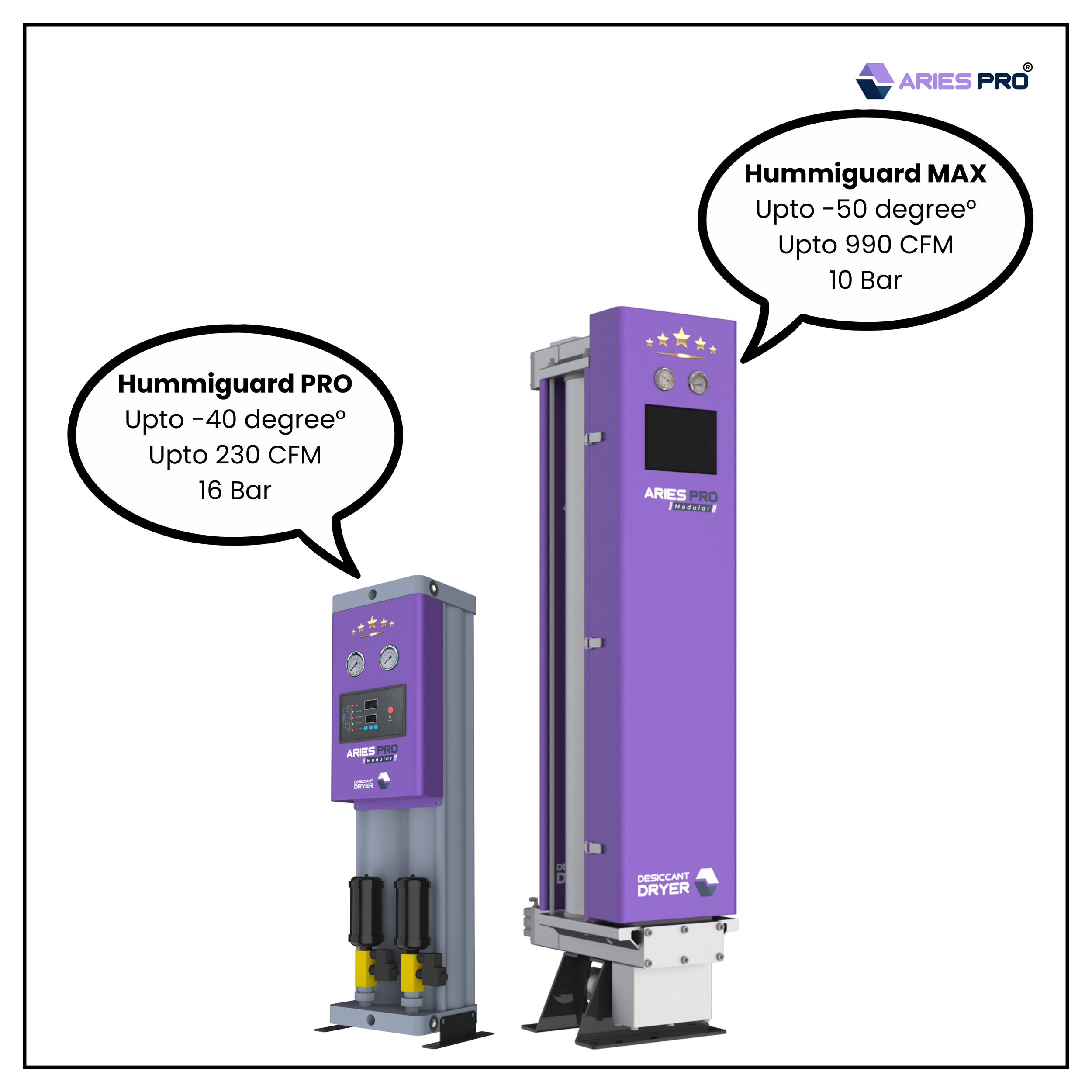
Conquering Humidity Hurdles of Pharma Industries and Others
For pharmaceutical facilities evaluating dew point control in their compressed air systems, understanding the performance of desiccant air dryers and their role in maintaining dry air can be an important step in ensuring long-term process reliability.
The ARIES PRO team works closely with pharmaceutical manufacturers to support compressed air systems that meet the demanding requirements of modern GMP environments.